

Can the Roland Flatbed Printer print on laminated materials?
As a supplier of Roland Flatbed Printers, I often get asked various questions about the capabilities of these remarkable machines. One question that comes up quite frequently is whether the Roland Flatbed Printer can print on laminated materials. In this blog post, I'll delve into this topic in detail, exploring the potential, challenges, and best practices for printing on laminated surfaces using our Roland Flatbed Printers.
Understanding Laminated Materials
Laminated materials are essentially composite materials created by bonding two or more layers together. The lamination process can involve different types of films, such as polyester, polypropylene, or vinyl, which are adhered to a substrate like paper, cardboard, or plastic. Laminates are used for a wide range of applications, from protecting printed materials to enhancing their appearance. They can be found in items like business cards, posters, packaging, and even furniture.
The Capabilities of Roland Flatbed Printers
Roland Flatbed Printers are known for their versatility and high - quality printing. These printers are equipped with advanced print heads and ink systems that allow them to print on a variety of substrates, including rigid and flexible materials. The printers use different types of inks, such as eco - solvent, UV - curable, and latex inks, each with its own set of properties and advantages.
Compatibility with Laminated Materials
The good news is that, in many cases, Roland Flatbed Printers can print on laminated materials. The key factor here is the type of laminate and the ink used. For example, UV - curable inks are often a great choice for printing on laminated surfaces. UV - curable inks dry almost instantly when exposed to UV light, which means they can adhere well to the smooth surface of a laminate. The rapid curing process also reduces the risk of smudging or scratching the print.
Eco - solvent inks are another option. These inks are known for their good adhesion to a variety of materials, including some types of laminates. They are also more environmentally friendly compared to traditional solvent - based inks. However, the adhesion of eco - solvent inks to laminated materials may depend on the specific composition of the laminate. Some laminates may have a very smooth or non - porous surface, which can make it more challenging for the ink to adhere properly.
Challenges in Printing on Laminated Materials
While it is possible to print on laminated materials using Roland Flatbed Printers, there are some challenges that need to be addressed.
Surface Preparation
One of the main challenges is ensuring proper surface preparation. Laminated materials can have a smooth, non - porous surface, which may prevent the ink from adhering well. To overcome this, it is often necessary to perform some form of surface treatment. This can include using a primer or a surface cleaner to remove any contaminants and improve the surface energy of the laminate. A higher surface energy allows the ink to spread and adhere more effectively.
Ink Adhesion
As mentioned earlier, the adhesion of the ink to the laminated surface is crucial. Different laminates have different surface properties, and some may require special inks or printing techniques to ensure good adhesion. For example, if the laminate has a very glossy surface, the ink may tend to bead up rather than spread evenly. In such cases, using a primer or a different type of ink may be necessary.
Best Practices for Printing on Laminated Materials
To achieve the best results when printing on laminated materials with a Roland Flatbed Printer, the following best practices should be followed:
Select the Right Ink
As discussed, UV - curable inks are often a good choice for printing on laminated materials due to their fast - drying and good adhesion properties. However, it is important to test the ink on a small sample of the laminate to ensure compatibility.
Surface Treatment
As mentioned, proper surface treatment is essential. Use a suitable primer or surface cleaner to prepare the laminate before printing. This will help the ink adhere better and improve the overall print quality.
Print Settings
Adjust the print settings according to the type of laminate and the ink being used. This may include adjusting the print speed, resolution, and ink density. Experimenting with different settings on a test print can help you find the optimal settings for your specific application.
Applications of Printing on Laminated Materials
There are many applications where printing on laminated materials can be useful. For example, in the signage industry, printing on laminated posters or banners can provide a more durable and attractive finish. In the packaging industry, printing on laminated cardboard or plastic can enhance the appearance of the product and protect it from damage.

Large - format Printing
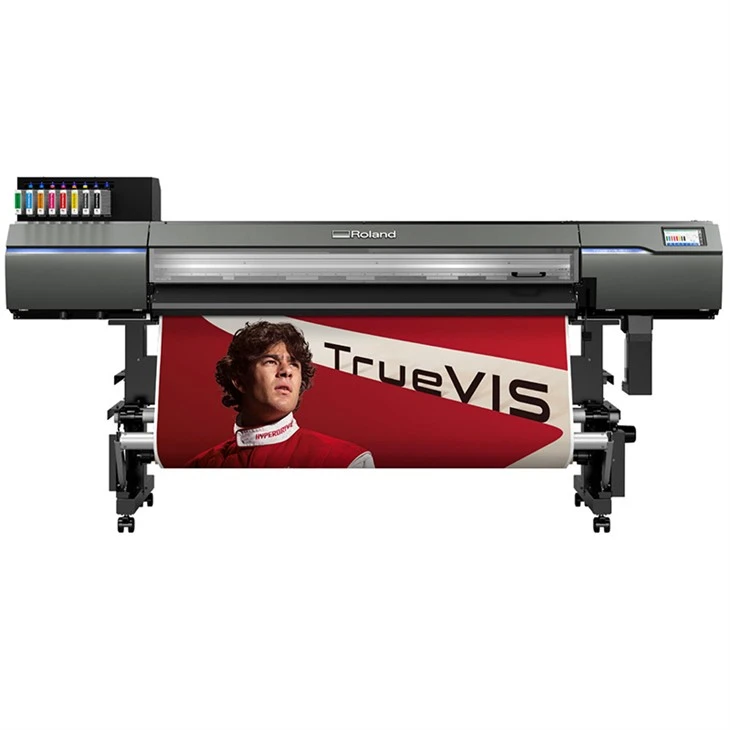
Roland Flatbed Printers are also capable of large - format printing on laminated materials. This makes them ideal for creating large - scale signs, displays, and murals. If you are interested in large - format printing on laminated materials, you can explore our Large - format Eco - solvent Printer, which offers high - quality and efficient printing solutions.
Cutting and Finishing
In addition to printing, some Roland Flatbed Printers, such as the Roland Printer Cutter, can also perform cutting operations. This allows for the creation of custom - shaped laminated products, such as business cards or packaging inserts.
UV Printing and Cutting
For more advanced applications, our UV Printing And Cutting Machine offers the ability to print and cut on laminated materials with high precision. The UV - curable inks used in these machines provide excellent adhesion and durability, making them suitable for a wide range of applications.
Conclusion
In conclusion, the Roland Flatbed Printer can indeed print on laminated materials, but it requires careful consideration of the type of laminate, the ink used, and proper surface preparation. By following the best practices outlined in this blog post, you can achieve high - quality prints on laminated surfaces.
If you are interested in purchasing a Roland Flatbed Printer for printing on laminated materials or have any questions about our products, we encourage you to reach out to us for a detailed discussion. Our team of experts is ready to assist you in finding the right solution for your specific needs.
References
- Roland DG Corporation product manuals and technical documentation.
- Industry research on printing technologies and materials.