

As a supplier of the Ricoh G5 print head, I often get asked about its maximum print resolution. In the world of inkjet printing, print resolution is a critical factor that directly impacts the quality of the printed output. It determines the level of detail, sharpness, and clarity that can be achieved. In this blog post, I'll delve into the maximum print resolution of the Ricoh G5 and discuss its implications for various printing applications.
Understanding Print Resolution
Before we dive into the specifics of the Ricoh G5, let's first understand what print resolution means. Print resolution is typically measured in dots per inch (DPI), which refers to the number of individual ink droplets that can be placed within a one - inch line. A higher DPI means more dots can be packed into a given area, resulting in a more detailed and smoother print.

For example, a print with a resolution of 300 DPI will have 300 dots in a one - inch horizontal and vertical line, creating a grid of 90,000 dots per square inch. In contrast, a 600 DPI print will have 600 dots in each line, resulting in 360,000 dots per square inch. The higher the DPI, the more information can be conveyed in the printed image, leading to better quality.
The Maximum Print Resolution of Ricoh G5
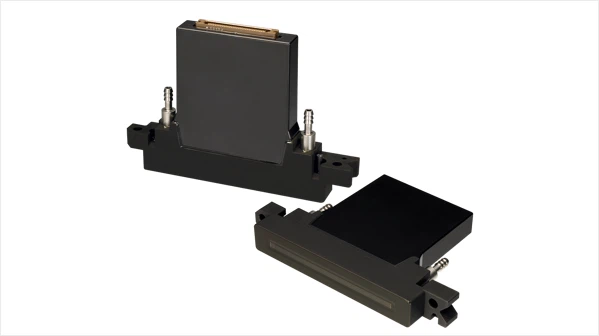
The Ricoh G5 is a high - performance print head that is capable of achieving a maximum print resolution of 1200 DPI. This high resolution makes it suitable for a wide range of applications where fine details and high - quality output are required. At 1200 DPI, the Ricoh G5 can produce sharp text, smooth gradients, and highly detailed images.
One of the key features that enable the Ricoh G5 to reach this high resolution is its advanced piezoelectric technology. Piezoelectric print heads use electrical charges to control the ejection of ink droplets from the nozzles. This precise control allows for accurate placement of ink droplets, even at high resolutions. The Ricoh G5 has a large number of nozzles, which are arranged in a precise pattern to ensure uniform ink deposition across the print area.
Applications of Ricoh G5's High Resolution
Text Printing
In the realm of text printing, the 1200 DPI resolution of the Ricoh G5 ensures that characters are crisp and clear. Whether it's printing small font sizes for labels or large - format text for signage, the high resolution helps to prevent blurring and jagged edges. This is particularly important for applications where readability is crucial, such as in product packaging or official documents.
Photo Printing
For photo printing, the 1200 DPI resolution allows the Ricoh G5 to capture the fine details in an image. From the subtle tones in a landscape photo to the texture of a person's skin in a portrait, the high resolution ensures that the printed photo closely resembles the original. This makes it a popular choice for professional photographers and photo labs looking to produce high - quality prints.
Industrial Printing
In industrial printing applications, such as printing on plastics, metals, or ceramics, the high resolution of the Ricoh G5 can be used to create detailed graphics and markings. For example, in the automotive industry, it can be used to print high - resolution logos and serial numbers on parts. In the electronics industry, it can be used for printing circuit board patterns with high precision.
Comparison with Other Print Heads
When compared to other popular print heads in the market, the Ricoh G5's 1200 DPI resolution holds its own. For instance, the Epson I3200 and Epson Xp600 are also well - known print heads. The Epson I3200 can achieve a maximum resolution of around 720 DPI, while the Epson Xp600 has a maximum resolution of 1440 DPI. The Ricoh G5i, which is a variant of the Ricoh G5, also offers a high - resolution printing option. The Konica 1024 can reach a maximum resolution of 600 DPI.
Each print head has its own advantages and disadvantages, and the choice depends on the specific requirements of the application. However, the 1200 DPI resolution of the Ricoh G5 provides a good balance between high - quality output and versatility, making it suitable for a wide range of printing tasks.
Factors Affecting Print Resolution in Practice
While the Ricoh G5 is capable of achieving a maximum print resolution of 1200 DPI, several factors can affect the actual resolution achieved in practice.
Ink Quality
The quality of the ink used plays a significant role in print resolution. High - quality inks with the right viscosity and surface tension are more likely to produce sharp and well - defined dots. Low - quality inks may spread or bleed on the print surface, reducing the effective resolution.
Print Speed
Print speed and resolution are often inversely related. When printing at high speeds, the print head may not have enough time to place each ink droplet precisely, resulting in a lower effective resolution. To achieve the maximum 1200 DPI resolution, the print speed may need to be reduced.
Substrate Surface
The surface of the substrate being printed on also affects the print resolution. Smooth and absorbent substrates, such as coated paper, are more likely to produce high - resolution prints. Rough or non - absorbent surfaces may cause the ink to spread or bead up, leading to a loss of detail.
Conclusion
The Ricoh G5's maximum print resolution of 1200 DPI makes it a powerful tool in the world of inkjet printing. Its high - resolution capabilities, combined with its advanced piezoelectric technology, make it suitable for a wide range of applications, from text and photo printing to industrial applications. While there are other print heads in the market, the Ricoh G5 offers a good balance between resolution, quality, and versatility.
If you're in the market for a high - performance print head and are interested in the Ricoh G5, I encourage you to reach out to discuss your specific requirements. Whether you're a small business looking to upgrade your printing capabilities or a large - scale manufacturer in need of a reliable printing solution, we can work together to find the best fit for your needs.
References
- Inkjet Printing Technology: Principles and Applications by Herbert N. Herce
- Advances in Printing and Imaging Science and Technology edited by David W. Thomas